Gaviera Cheese

- 🥛 6 L Whole Cow's Milk, at least 3.25% fat, Indigenous Dairy
- 🐐 2 L Goat's Milk, CapriLac
- 🧫 1/4 tsp Thermophilic B (ST + LB) starter culture
- 🧫 1/64 tsp Sacco LPR A protective culture
- 💧 3/8 tsp 2 ml Calcium Chloride, diluted in 1/4 cup non-chlorinated water
- 🍶 3/8 tsp 2 ml Single Strength Liquid Rennet IMCU 200, diluted in 1/4 cup non-chlorinated water
- 🧂 18% Brine solution for brining
- 🧂 Cheese salt for refreshing brine
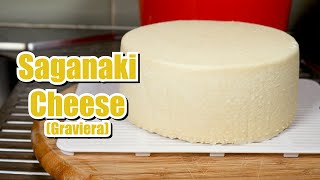
A delightful hard cheese inspired by Greek Graviera and Swiss Gruyere, perfect for traditional dishes like saganaki.
Gaviera cheese is a delightful take on the classic Greek Graviera, which itself is inspired by Swiss Gruyere. This hard, Greek-style cheese is perfect for traditional dishes like saganaki. While the aging process takes a while, the effort put into crafting this cheese pays dividends in flavor and authentic texture.
Ingredients
🥛 6 L Whole Cow's Milk, at least 3.25% fat, Indigenous Dairy
🐐 2 L Goat's Milk, CapriLac
🧫 1/4 tsp Thermophilic B (ST + LB) starter culture
🧫 1/64 tsp Sacco LPR A protective culture
💧 3/8 tsp 2 ml Calcium Chloride, diluted in 1/4 cup non-chlorinated water
🍶 3/8 tsp 2 ml Single Strength Liquid Rennet IMCU 200, diluted in 1/4 cup non-chlorinated water
🧂 18% Brine solution for brining
🧂 Cheese salt for refreshing brine
Instructions
1- Sanitize Equipment:
- Begin by thoroughly sanitizing all the equipment to ensure a clean working environment for cheese-making.
2- Combine Milks:
- In a large stainless steel pot, mix 6 L of whole cow's milk and 2 L of goat's milk.
3- Heat Milk:
- Utilize a steady heat source or a kitchen water bath with an
Anovaprecision cooker to gradually heat the mixed milks to 32°C / 90°F.
4- Add Cultures:
- Evenly sprinkle 1/4 tsp Thermophilic B starter culture over the milk.
- Follow by sprinkling 1/64 tsp Sacco LPR A protective culture over the milk.
- Allow cultures to rehydrate for 5 minutes, covering the pot to prevent contamination.
5- Stir Cultures:
- Stir the cultures into the milk thoroughly, ensuring even distribution from top to bottom for about 1 minute.
6- Ripen Milk:
- Allow the milk to ripen for another 10 minutes.
7- Add Calcium Chloride and Rennet:
- Add the diluted Calcium Chloride and, after stirring well, follow with the addition of the diluted Rennet.
- Stir for no more than a minute.
8- Set Milk:
- Cover the pot and let the milk set for around 40 minutes before checking for a clean break.
- If needed, wait an additional 10 minutes.
9- Cut and Heal Curds:
- With a curd knife, cut the set curd into columns.
- Use a whisk to cut further until they are about the size of rice grains.
- Let the curds heal for 5 minutes.
10- Stir and Heat:
- Over an hour, heat the curds gently to 46°C / 114°F while stirring continuously to ensure even cooking.
11- Drain Curds:
- Rest the curds to settle at the pot's base.
- Drain into a cheese mold lined with cheese cloth.
12- Pressing Process:
- First Pressing: Press curds at 10kg / 22 lbs for 30 minutes using a cheese press.
- Second Pressing: After turning and redressing, press for an additional hour at 10kg / 22 lbs.
- Third Pressing: Again turn and redress, then press overnight for 18 hours at 15kg / 33 lbs.
13- Brining:
- Prepare an 18% brine solution and submerge the cheese for 8 hours, turning halfway.
14- Air Drying:
- Dry the cheese for 3 days on a mat, with twice-daily turning.
15- Aging:
- Finally, vacuum pack the cheese using a
Sunbeam FoodSaverand allow it to ripen for five months at 10-12°C / 50-54°F.
Prep Time: Approximately 2 hours (excluding ripening, drying, and aging)
Cook Time: Total pressing sequence of approximately 20 hours
Total Time: 5 months (including drying and aging)
Servings: Variable depending on use
Equipment: Anova Precision Cooker, large stainless pot, cheese mold, cheese cloth, cheese press, Sunbeam FoodSaver
Cooking Tips
- Ensure sanitation to prevent contamination.
- Use precise measurements for cultures and salts for optimal cheese texture and flavor.
- Maintain vigilance on temperature stability for the best cheese curd set.
#cheesemaking #gaviera #homemadecheese #saganaki #greekcuisine
Gavin Webber: https://www.youtube.com/@GavinWebber

Comments